 THE ALBANIAN NOTEBOOK
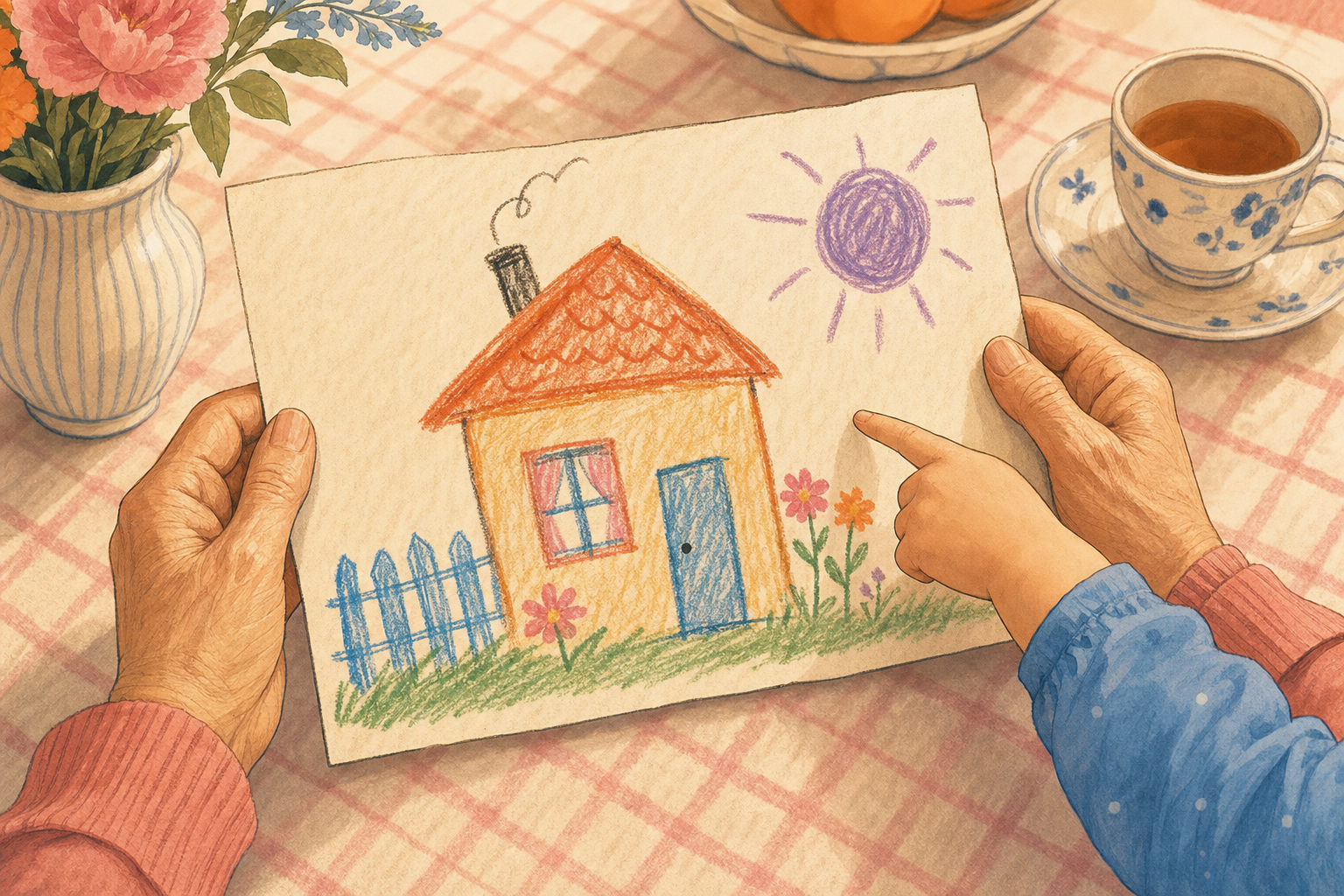
A child holds up a crayon drawing: a lopsided house, a purple sun. Their grandmother takes it and says, warmly, “Të keqen!”
If you know that keq means “bad”, this sounds alarming. Is she calling the child “the bad one”? Not at all. She has just offered to suffer in the child's place.
(An illustrative scene, not a recorded conversation.)
Taking it apart
“Të keqen!” is the short version of Të marrsha të keqen!
- të – (from) you
- marrsha – may I take, the wish form of marr (to take)
- të keqen – the bad thing, the harm
Put together, it means roughly “may I take your trouble on myself”. Marrsha uses the same wish ending you met in “E gëzofsh!”, and keep the double rr. It's a letter of its own.
Three moods
1. Tender. Said to someone you love, especially a child: Të keqen, sa i bukur! – Oh sweetheart, how lovely!
2. Pleading. A heartfelt “please”, with the whole wish spelled out for emphasis: Të marrsha të keqen, mos u vono! – Please, I beg you, don't be late!
3. Cursing. Now switch who takes what. Më marrsh të keqen! means “may you take my trouble”. Dictionaries mark it as a curse for someone who tried to harm you and failed, or whom you simply can't stand: off you go, we neither need you nor fear you.
The pronoun is small (të or më), but it decides whether you are giving love or showing someone the door.
Your turn
Which mood is each line?
- Të keqen, ke vizatuar diellin!
- Të marrsha të keqen, ma sill çantën!
- Më marrsh të keqen, s'kam frikë prej teje!
Answers. (1) Tender: affection for a child's drawing of the sun. (2) Pleading: “please, bring me the bag”. (3) Curse: “take my trouble, I'm not afraid of you”. Më plus marrsh is the giveaway.
Takeaway
When someone says “Të keqen!” to you, take it as a kindness. Just listen for më marrsh, which is not kind at all.
Keep learning
Explore more articles →