 THE ALBANIAN NOTEBOOK
You open a paper Albanian dictionary to look up shtëpi (house). You work through the whole S section and find nothing. Then the S pages end and a new section begins: Sh. There it is.
That isn't a printing quirk. In Albanian, sh is not s plus h. It is one letter, with one sound and its own place in the alphabet.
Nine letters written with two characters
Nine of the 36 letters are written as pairs: dh, gj, ll, nj, rr, sh, th, xh, zh. Each stands for a single sound. Like other consonants, each letter's name adds ë, so sh is called shë.
Example 1: pairs that change meaning
Some of these letters have a simpler partner, and mixing them up changes the word.
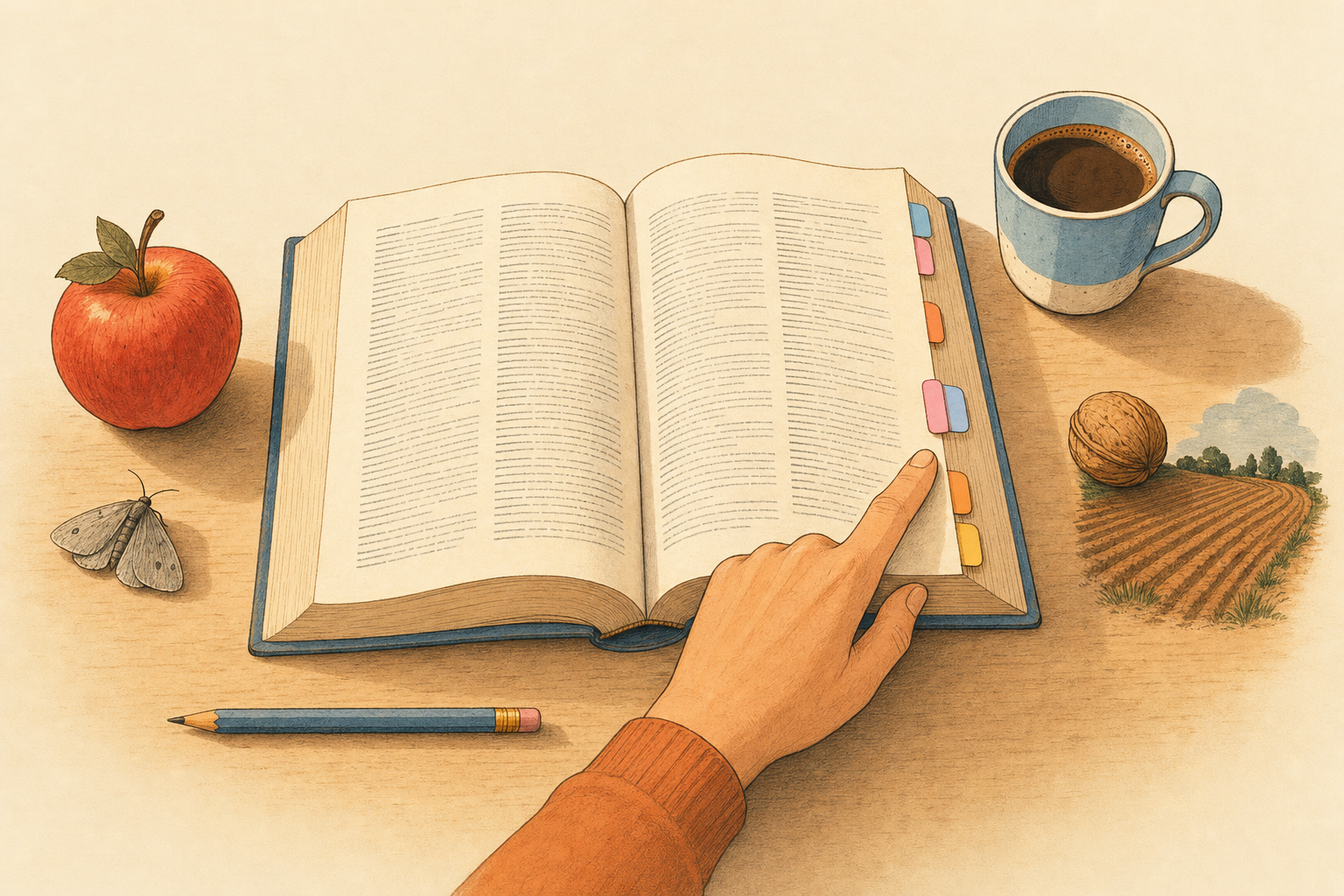
- molë (moth) and mollë (apple). Single l is light. Ll is darker, close to the l at the end of English "ball".
- arë (field) and arrë (walnut). Single r is a quick tap, like the r in Spanish pero. Rr is a full roll, like the rr in perro.
Say arrë with a quick tap and you have said "field", not "walnut".
Example 2: the xh trap
Xhep (pocket) is not "x-hep". Xh sounds like the j in "jam", so the word sounds roughly like "jep". Its partner zh is the sound in the middle of "measure", as in zhurmë (noise).
Why pairs instead of accents?
Today's alphabet goes back to the Congress of Manastir in November 1908. It writes most of Albanian's extra sounds with pairs of ordinary Latin letters, and only ë and ç carry marks. A likely practical bonus was that any printer with Latin type could set the language.
The spelling is the same everywhere, but accents differ. In some Gheg-speaking areas, you may hear q and ç, or gj and xh, sound almost the same.
Your turn
Put these in Albanian dictionary order: shtëpi, sot, rrugë, rosë, një, natë.
Answer: natë, një, rosë, rrugë, sot, shtëpi. N comes before Nj, R before Rr, and S before Sh. So një (one) waits until the N-words are finished, and every Sh-word comes after the last S-word.
Takeaway: when you see two letters together in Albanian, check whether they make one letter. Once you treat them as single letters, reading, pronunciation and dictionary lookups get much easier.
Keep learning
Explore more articles →