 THE ALBANIAN NOTEBOOK
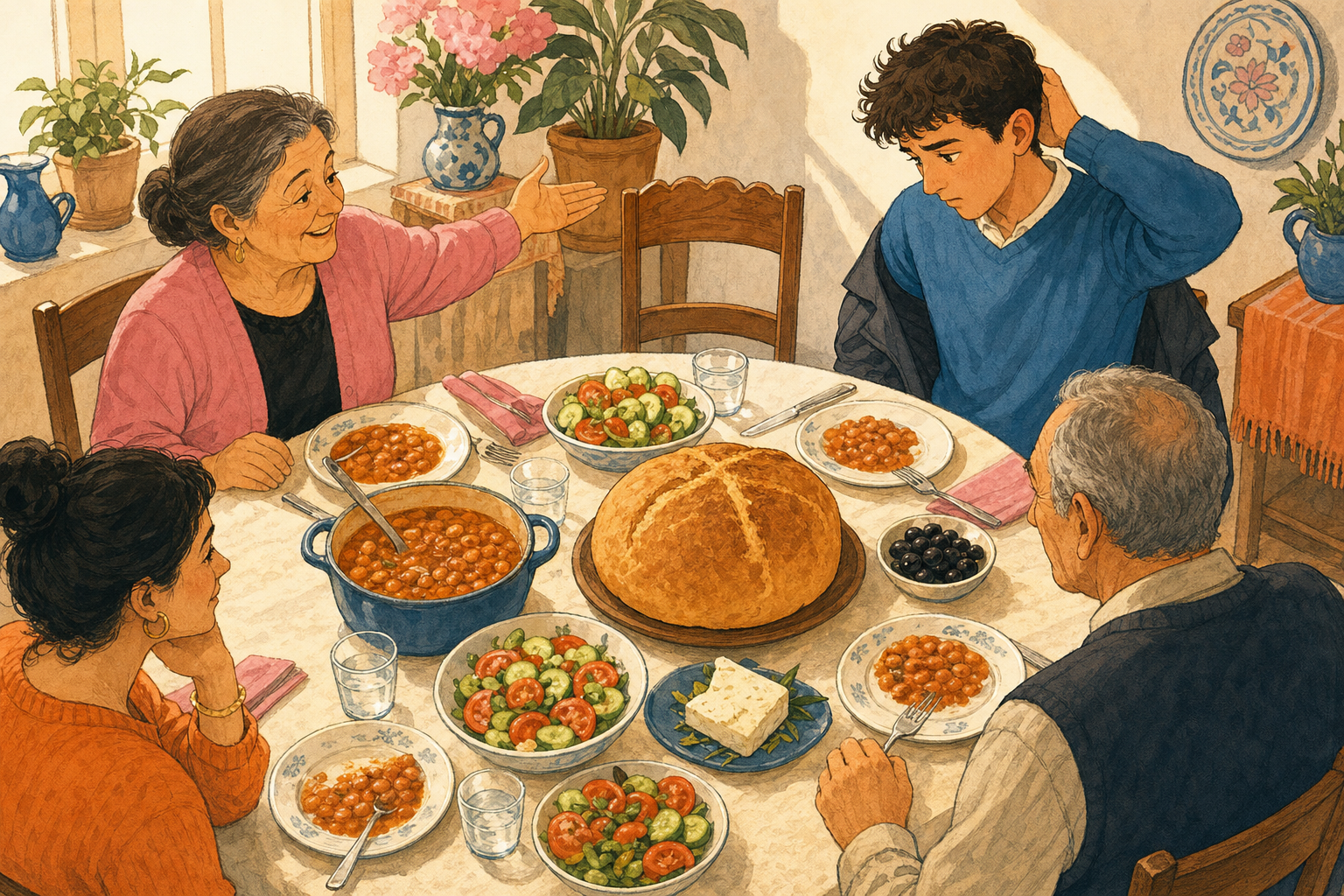
It's two in the afternoon and you've just arrived at a friend's family home. Before you've taken your coat off, her mother asks: “Hëngre bukë?”
You avoid gluten, so you start explaining that you don't really eat bread. She looks puzzled. She wasn't asking about bread. She was asking whether you've had lunch.
(An illustrative scene, but an easy mix-up to make.)
One word, two sizes
Bukë is bread, the loaf on the table. In the singular, though, it also means a meal: breakfast, lunch or dinner, or simply food and eating. Context tells you which size of bukë you're dealing with.
So ha bukë usually means “eat a meal”, not “eat bread”. The same idea appears all around the table:
- koha e bukës: mealtime
- dhoma e bukës: dining room
- shtroj bukën: set out the meal or lay the table
- ngrihem nga buka: get up from the table after eating
Three worked examples
1. On the phone — Ku je? (Where are you?) — Po ha bukë. (I'm having lunch.) Nobody pictures a lonely loaf here. You're eating.
2. The host's question — Hëngre bukë? (Have you eaten?) — Jo, ende jo. (No, not yet.) Note the verb. Ha (eat) has an irregular past tense: hëngra (I ate), hëngre (you ate), hëngri (he or she ate). So a full “yes” is Po, hëngra.
3. Bread and cheese E kam bukë e djathë. Literally “I have it as bread and cheese”. It means the task is very easy for me, much like “a piece of cake”. The simplest food becomes a picture of something effortless.
Small challenge
What does Jam pa bukë usually mean?
Answer: “I haven't eaten.” Literally it's “I am without bread”, but because bukë can mean the meal, the usual sense is about your empty stomach, not your empty bread bin.
Takeaway
When bukë comes with ha or with the table, think “meal” first. Then answer “Hëngre bukë?” honestly, with Po, hëngra or Jo, ende jo.
Keep learning
Explore more articles →