 THE ALBANIAN NOTEBOOK
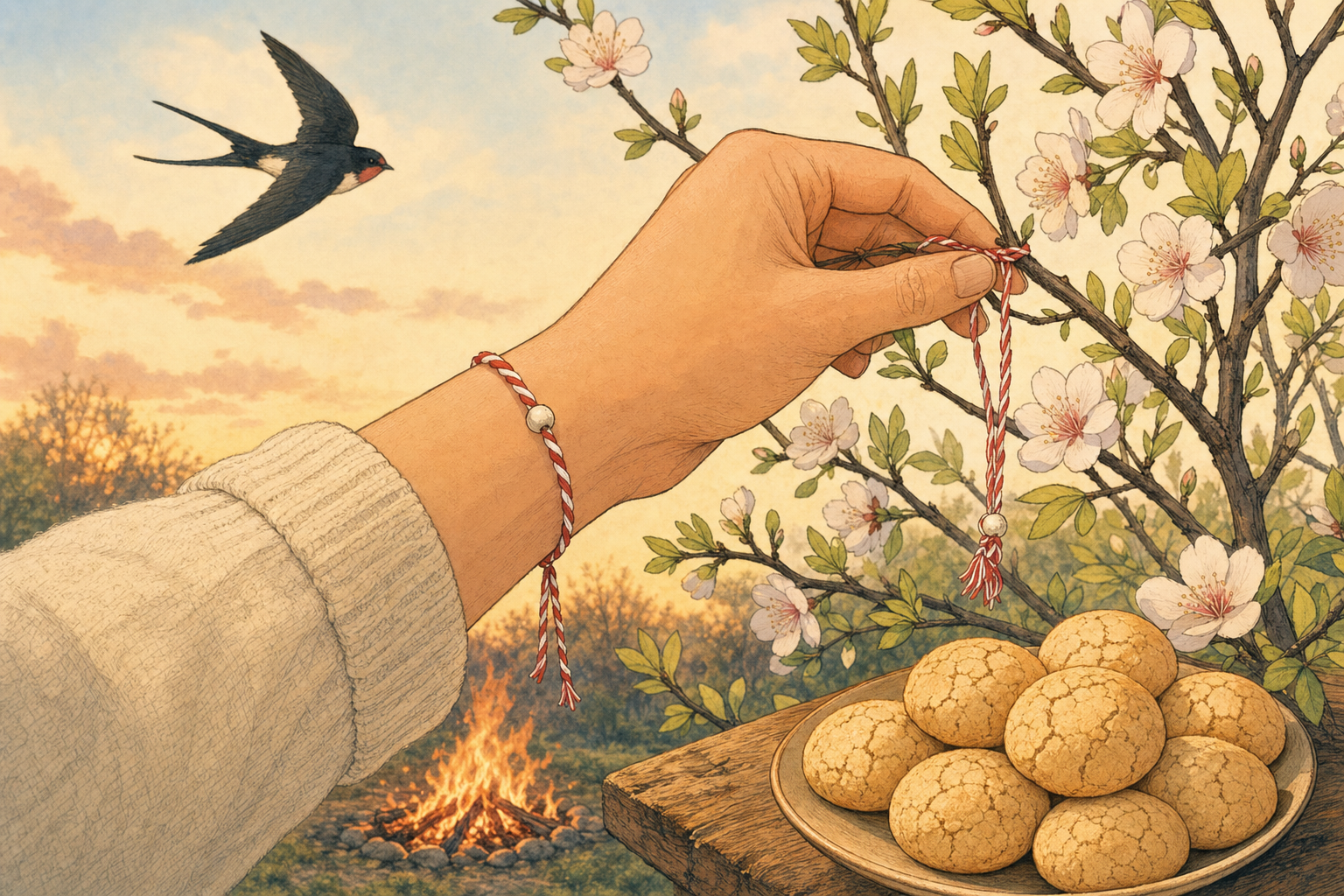
On the evening of 13 March, bonfires are lit in many Albanian neighbourhoods. On plenty of wrists you will see a thin twist of red and white thread with a small bead in the knot. That is a verore. You do not take it off on a set date. Traditionally you wait until you spot the first swallow of spring. Then the thread goes on a bush or a branch, where the bird can use it for its nest.
The next day, 14 March, is Dita e Verës, a national holiday since 2004 and celebrated most famously in Elbasan. The date is the old 1 March of the Julian calendar. Families open their homes in the morning to welcome good fortune, many head outdoors at midday, and trays of ballokume appear. These are crumbly cookies made with corn flour, butter, sugar and eggs. Customs vary between towns, families and religious communities, so treat this as a common picture rather than a single rule.
And yes, the name means “Summer Day”, in March.
Reading the name
1. verë → vera → e verës Verë is “summer”. Vera is “the summer”. Dita e verës means “the day of the summer”. The little e plus the ending -s does the work that English does with “of”.
2. Dita → Ditën People greet each other and post Gëzuar Ditën e Verës! (“Happy Summer Day!”). Notice that Dita has become Ditën. After gëzuar, the noun takes a different ending. It is the same word playing a different role in the sentence. You don't need the full grammar yet. Just notice that Albanian nouns change shape, and festival greetings are a friendly place to see it happen.
3. verë → verore Add -ore and you get verore, “of summer”. That is how the bracelet got its name: it is a little piece of summer you wear until the swallows come back.
Try it
How would you wish a friend a happy Summer Day?
Answer: Gëzuar Ditën e Verës! If you wrote Gëzuar Dita e Verës, you were close. Just remember that Dita becomes Ditën after gëzuar.
Keep learning
Explore more articles →