 THE ALBANIAN NOTEBOOK
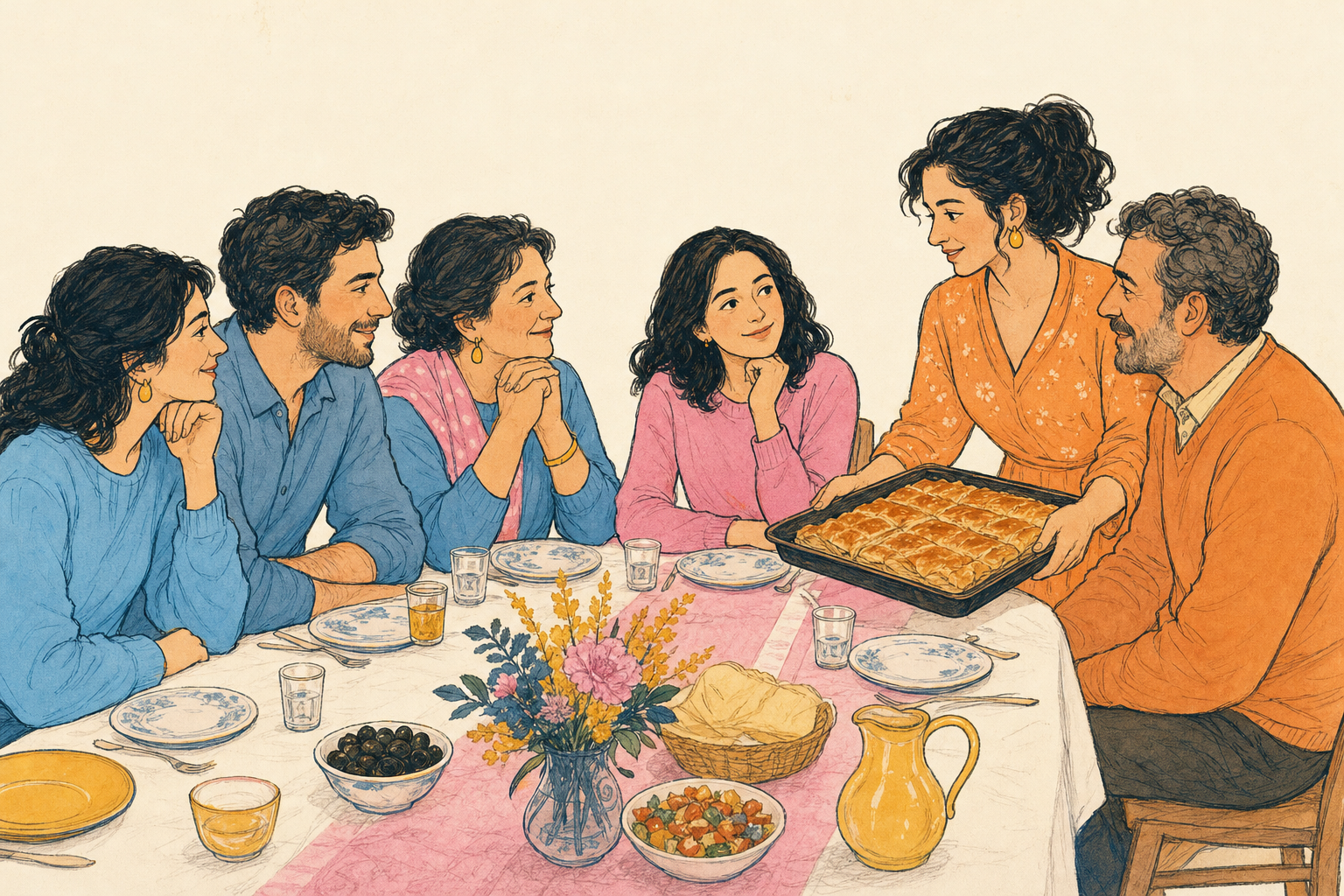
You are at a family lunch and someone calls across the table: "Daja Besnik, eja!" ("Uncle Besnik, come here!"). A moment later, "Halla Nora" arrives with a tray of byrek.
Nobody has explained the family tree, but the words already have. Besnik is the mother's brother. Nora is the father's sister.
Four words where English has two
| | Mother's side | Father's side | |---|---|---| | Aunt | teze | hallë | | Uncle | dajë | xhaxha |
These are the dictionary forms. When people address a relative or introduce one, they normally use the definite ("the") form: tezja, halla, daja, xhaxhai. You will often hear xhaxhi in everyday speech too. So the person at the table is Daja Besnik, not Dajë Besnik.
Worked examples
1. Introducing your mother's brother Ky është daja im. "This is my uncle (my mum's brother)." Notice im ("my"). Dajë ends in -ë, but it refers to a man, so it takes the masculine im.
2. Talking about your father's sister Halla ime jeton në Shkodër. "My aunt (my dad's sister) lives in Shkodër."
3. Your father's brother Xhaxhai im punon në Tiranë. "My uncle (my dad's brother) works in Tirana."
Not every family word splits
Albanian is not more detailed everywhere. Going down the generations, it combines what English separates. A nip can be a grandson or a nephew, and a mbesë can be a granddaughter or a niece. Context, or a follow-up question, tells you which.
You may also hear regional or older forms in some families. If your relatives use a different word, follow their lead.
Quick challenge
Mira is your father's sister and Arben is your mother's brother. How do you introduce them?
Answer: Kjo është halla ime, Mira. Ky është daja im, Arben. Mira is on your father's side, so she is halla. Arben is on your mother's side, so he is daja. Kjo and ime are feminine for Mira. Ky and im are masculine for Arben.
Takeaway: to choose the right word for an aunt or uncle in Albanian, first ask which parent they are related through.
Keep learning
Explore more articles →