 THE ALBANIAN NOTEBOOKspeech-surprise
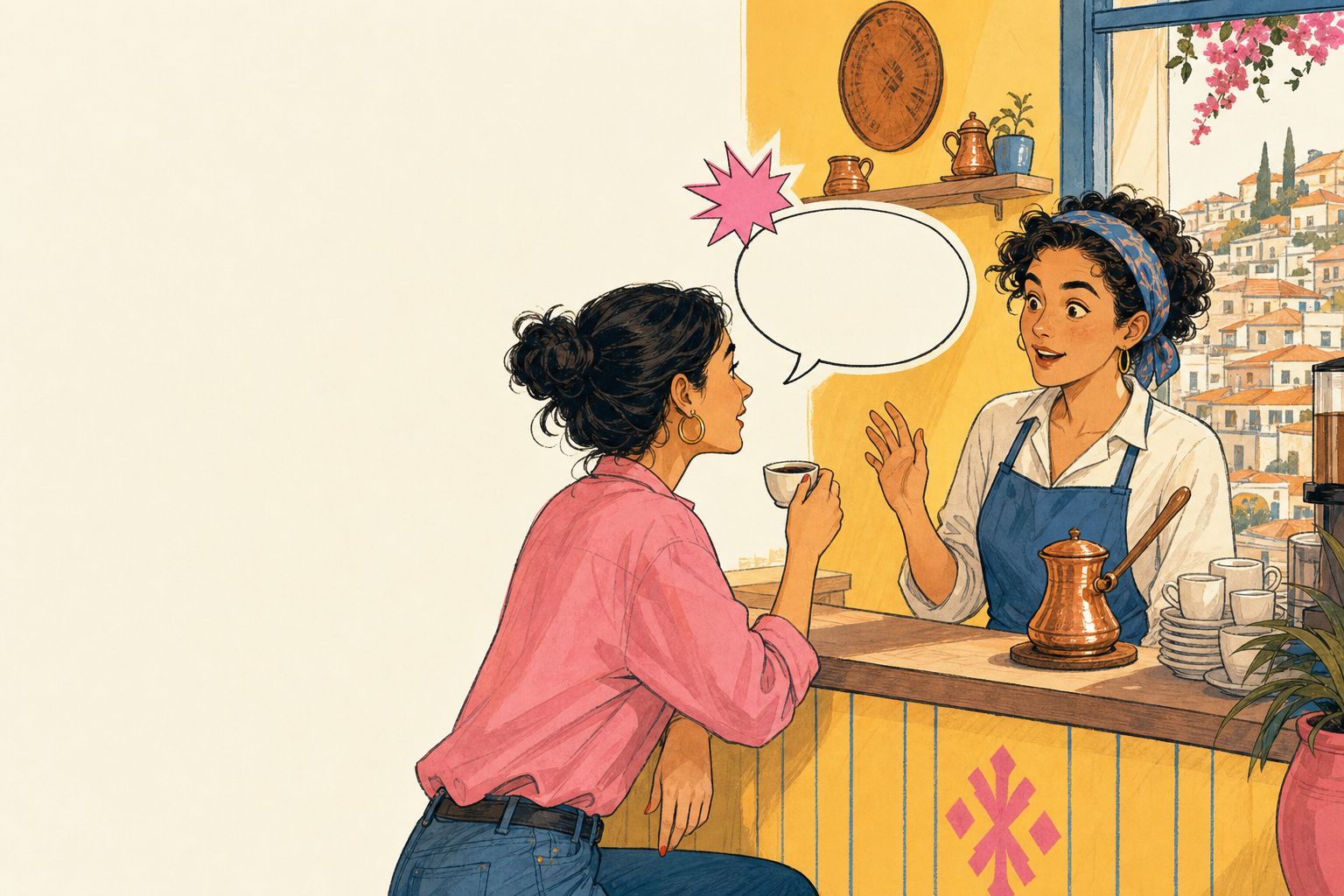
You order a coffee in Albanian. Your accent is shaky, but the sentence works. The person behind the counter looks up and says:
Ti folke shqip!
Not Ti flet shqip, “You speak Albanian”, which is what the textbook taught you. Something changed in the verb, and that change carries the raised eyebrows: “Well, look at that, you speak Albanian!”
This is the admirative, mënyra habitore, from habi, “surprise”. It is often one of the first pieces of grammar a learner hears aimed at them, so it is worth recognising early.
Same fact, new discovery
- Ti flet shqip. You speak Albanian. (A plain statement.)
- Ti folke shqip! You speak Albanian! (I’ve only just realised.)
English adds “oh” or “it turns out”. Albanian can put the discovery inside the verb.
Three forms to know first
qenka, from jam, “to be”. You step outside and the air bites: Qenka shumë ftohtë jashtë! It’s really cold out!
paska, from kam, “to have”. You glance at the display by the till: Kafeneja paska edhe ëmbëlsira! The café has pastries too!
folke, the ti form built on folur, the participle of flas, “to speak”. It’s the one you heard at the counter.
Mind the tone
Surprise is the main use, but not the only one. Ai qenka i mirë can mean “He’s good, what a pleasant surprise”, or, with a sceptical look, “He’s supposedly good… sure.” The face that comes with it tells you which. In your own speech, start with the happy surprises.
Try it
Your first sip is far stronger than you expected. The plain sentence is Kafeja është e fortë. How do you make it sound surprised?
Answer: Kafeja qenka e fortë! Është becomes qenka, and the sentence now says “Wow, this coffee is strong!”
So next time someone answers your Albanian with folke, they aren’t correcting you. They’ve just made a small discovery and are letting you share it.
Keep learning
Explore more articles →